
Instructive Chess Games – Kingscrusher & Grandmasters
Welcome to the Instructive Games archive. Here you will find analysis of Kingscrusher's own tournament battles—capturing the drama and psychology of competitive play—as well as deep dives into masterpieces by Grandmasters like Michael Adams, Vassily Ivanchuk, and Anatoly Karpov.
About Kingscrusher (CM Tryfon Gavriel)
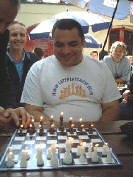
Candidate Master (CM) Tryfon Gavriel (aka Kingscrusher) is the pioneer behind ChessWorld.net and the popular YouTube channel youtube.com/kingscrusher.
His commentary style is a throwback to the Romantic era of chess—focusing on combinations, speculative sacrifices, and entertainment. The videos below include first-hand accounts of his own Over-the-Board (OTB) games, capturing the immediate thoughts and emotions of tournament play.
Kingscrusher's Tournament Games
Lloyds Bank Masters & FIDE Tournaments
Hertfordshire & North Circular Leagues
British Championship & Congress Games
GM Michael Adams Games
GM Vassily Ivanchuk Games
Karpov & Classic Master Games
GM Howell & IM Webster Games
WGM Natalia Pogonina Games
Instructive Chess Games: Videos, Lessons and Classic Battles
Frequently Asked Questions
These answers explain what makes a game instructive, how to study one properly, and which videos on this page are especially useful for practical improvement.
What makes a chess game instructive?
What is an instructive chess game?
An instructive chess game is a game that clearly teaches a practical idea, plan, tactic, or endgame method. The best examples show a recognisable turning point such as a weak square, a breakthrough, an exchange sacrifice, or a failed defensive setup. Start with the Kingscrusher's Tournament Games section to trace those turning points inside real competitive battles.
Why are instructive chess games useful?
Instructive chess games are useful because they show how strong ideas actually work move by move. Pattern recognition improves faster when you study complete plans rather than isolated positions or slogans. Open the GM Michael Adams Games section to watch how one strategic idea gets converted into a full result.
Are instructive chess games better than random blitz games for improvement?
Yes, instructive chess games are usually better than random blitz games when your goal is structured improvement. Good model games highlight cause and effect, whereas many blitz games are dominated by time pressure, omissions, and unstable evaluations. Use the Karpov & Classic Master Games section to study cleaner strategic logic than you usually get from casual blitz.
Do instructive games have to be famous games?
No, instructive games do not have to be famous games. A lesser-known tournament fight can be more educational than a celebrated brilliancy if the strategic lesson is clearer and easier to reuse. Explore Kingscrusher's Tournament Games to see practical lessons coming from personal OTB experience rather than fame alone.
Can a losing game still be instructive?
Yes, a losing game can be highly instructive if it exposes a mistaken plan, a defensive failure, or a missed practical resource. Strong players often improve by studying where evaluation swings happened and why the position stopped being playable. Watch Game vs GM Michael Adams to examine how pressure from a stronger player reveals the real demands of the position.
What makes one chess game more instructive than another?
One chess game is more instructive than another when the key lesson is clear, repeatable, and tied to concrete moves rather than vague admiration. Games become especially memorable when a single theme such as rook activity, a knight outpost, or a central break governs the whole struggle. Open Octopus Knight: Karpov vs Kasparov 1985 to watch one dominating square shape the entire battle.
How should you study instructive games?
How should I study instructive chess games?
You should study instructive chess games slowly enough to predict plans, candidate moves, and turning points before hearing the explanation. Active recall works better than passive watching because it forces you to compare your thinking with the stronger plan. Begin with Win vs K. Murugan (2420) and pause at critical moments to test whether you spot the same practical decisions.
Should beginners study instructive chess games?
Yes, beginners should study instructive chess games if the games are explained clearly and the lessons are concrete. Development, king safety, open files, weak pawns, and tactical motifs are easier to remember when they appear inside full games. Start with Capablanca: Rook on the 7th Demonstration to absorb one classic idea without heavy opening theory.
How many instructive games should I study each week?
Most club players benefit more from studying a few instructive games well than from skimming dozens quickly. Repetition matters because durable improvement comes from revisiting the same strategic patterns until they become familiar in your own games. Use one short run through the GM Vassily Ivanchuk Games section each week and return to the same videos after your own tournament games.
Should I memorise the moves of instructive games?
No, you do not need to memorise every move of instructive games to benefit from them. What matters most is remembering the position type, the plan, the tactical trigger, and the conversion method. Watch f5 Breakthrough (vs Topalov) to fix the breakthrough theme in memory rather than trying to recite the whole score.
Is it better to study complete games or puzzle fragments?
It is better to study both, but complete games teach context in a way puzzle fragments cannot. A full game shows how opening choices, middlegame plans, and endgame details connect into one strategic story. Open The King that Escaped to follow how danger builds, shifts, and finally gets handled across the whole struggle.
Should I use an engine while studying instructive games?
You should usually understand the human plan first and use an engine only afterward for verification. Engines are excellent at spotting tactical corrections, but raw engine lines can hide the strategic reason a move was strong or necessary. Watch Ivanchuk vs Kasparov (Linares 1991) first for the human battle, then revisit the key moments with deeper analysis afterward.
Kingscrusher's own games
Are Kingscrusher's own games worth studying?
Yes, Kingscrusher's own games are worth studying because they show practical tournament decisions under real pressure. First-hand commentary often reveals psychology, uncertainty, and plan selection more honestly than polished database notes. Open Kingscrusher becomes FIDE CM (Nov 2010) to connect the page with an important milestone in competitive progress.
Why study Kingscrusher's tournament games instead of only elite grandmaster games?
Studying Kingscrusher's tournament games is useful because the mistakes, plans, and practical decisions are often closer to what club players actually face. Improvement accelerates when the model is strong enough to teach but still recognisably human in its decision points. Explore the Hertfordshire & North Circular Leagues section to see ideas you are more likely to meet in everyday competition.
Is a game against a much stronger player still useful to watch?
Yes, a game against a much stronger player is often extremely useful because it exposes exactly where strong technique starts to squeeze. Class gaps become educational when you can identify the positional concessions and tactical punishments that stronger players notice immediately. Watch Game vs GM Michael Adams to see how elite accuracy increases the cost of every small inaccuracy.
What can club players learn from Kingscrusher vs Michael Adams?
Club players can learn how quickly a strong grandmaster converts pressure once development, coordination, or king safety starts slipping. Against elite opposition, one harmless-looking concession can become a lasting strategic burden. Open Game vs GM Michael Adams to observe how strong play punishes small defects before they turn into obvious blunders.
Do personal tournament stories make a chess game more instructive?
Yes, personal tournament stories can make a chess game more instructive because they reveal the thinking behind the moves and the emotions behind the decisions. Chess understanding deepens when you know whether a move was played from confidence, fear, optimism, or practical necessity. Watch That's not what I saw in the movies! (Part 1) to feel how expectation and reality can diverge over the board.
Can I learn from games that look messy or imperfect?
Yes, messy or imperfect games can be extremely instructive because practical chess is rarely neat. Initiative, king exposure, and time-sensitive decisions often matter more in real play than perfect aesthetic accuracy. Open Not Playing Simple Chess! to examine how practical complexity creates lessons that polished textbook games sometimes hide.
Grandmaster and classic lessons
Why are Karpov games often described as instructive?
Karpov games are often described as instructive because they show restriction, prophylaxis, and squeeze technique with unusual clarity. His best wins demonstrate how small advantages such as weak squares, better minor pieces, and improved rook placement can become decisive. Open Octopus Knight: Karpov vs Kasparov 1985 to watch a single outpost dominate the strategic narrative.
What can I learn from Ivanchuk's games?
Ivanchuk's games teach creative calculation, dynamic piece coordination, and sudden shifts between strategic and tactical play. He is especially instructive because unusual ideas still obey concrete positional logic underneath the surface chaos. Open Ivanchuk's 3 Piece vs Queen Trick to see how resourcefulness and coordination can outweigh material simplifications.
Why is Capablanca so good for learning chess?
Capablanca is so good for learning chess because his games often make difficult strategic ideas look natural and economical. He was famous for piece activity, endgame clarity, and converting small advantages with minimal waste. Watch Capablanca: Rook on the 7th Demonstration to see one classic attacking and endgame principle expressed with clean technique.
Are attacking games more instructive than positional games?
No, attacking games are not automatically more instructive than positional games. Many successful attacks are built on earlier positional gains such as better development, open lines, weakened colour complexes, or a trapped king. Compare Nice Exchange Sac Game with Capablanca: Rook on the 7th Demonstration to see how both attack and technique can teach different kinds of clarity.
Can one famous game teach a whole strategic concept?
Yes, one famous game can teach a whole strategic concept when the same theme governs the critical decisions from start to finish. Classic teaching games endure because one memorable structure or manoeuvre keeps reappearing until the lesson becomes unmistakable. Open Octopus Knight: Karpov vs Kasparov 1985 to study how domination on one square radiates across the entire board.
Do old classic games still matter in modern chess?
Yes, old classic games still matter because core chess principles have not disappeared. Modern preparation changes openings, but weak squares, open files, king safety, coordination, and conversion technique still decide countless games. Use the Karpov & Classic Master Games section to connect timeless strategic ideas with positions you can still reach today.
Practical improvement and misconceptions
Will watching instructive chess games improve my rating by itself?
Watching instructive chess games can improve your rating, but only if you actively connect the lessons to your own play. Improvement comes from transfer, meaning you must recognise the same structures, mistakes, and opportunities in your own games. Work through the Kingscrusher's Tournament Games section and then compare the same themes with your latest tournament results.
Are instructive games only for advanced players?
No, instructive games are not only for advanced players. Simpler classics can teach beginners while sharper modern battles can challenge stronger club players with richer calculation and defensive demands. Start with the Karpov & Classic Master Games section for clarity, then move into the Ivanchuk and Adams selections for more complexity.
Is it better to study wins than losses?
No, it is not always better to study wins than losses. Losses often expose the exact habit, plan failure, or tactical blind spot that needs work most urgently. Use Game vs GM Michael Adams alongside Win vs IM Crouch to compare how successful and unsuccessful practical decisions diverge.
Can instructive games help with openings?
Yes, instructive games can help with openings when they show the middlegame plans that arise from those openings. Opening understanding is much stronger when you know which pawn breaks, piece placements, and long-term targets the opening is aiming for. Watch c3 Sicilian: Howell vs Ward to connect opening moves with the strategic battle that follows.
Can instructive games help with endgames too?
Yes, instructive games can help with endgames because many model games are really lessons in conversion and rook activity after the middlegame complications fade. Strong endgame teaching often begins much earlier with exchanges, piece placement, and pawn-structure decisions. Open Capablanca: Rook on the 7th Demonstration to see how middlegame pressure and endgame technique reinforce each other.
Do I need to know all the theory before watching these games?
No, you do not need to know all the theory before watching these games. The main educational value is usually in the ideas, plans, and practical decisions after the opening phase starts to branch out. Start with Powerful Exchange Sac vs Paul Byway and focus on why the sacrifice works, not on memorising every early move.
What is the fastest way to get value from this instructive games page?
The fastest way to get value from this page is to pick one player or theme and study a small cluster rather than clicking randomly. Thematic repetition strengthens recall because similar strategic patterns start to echo across different games and opponents. Choose one section such as GM Michael Adams Games and trace how pressure, restraint, and conversion appear across several videos.
Which section should I start with if I want practical improvement fast?
You should start with Kingscrusher's Tournament Games if you want practical improvement fast. Real tournament commentary often makes mistakes, plans, and emotional decisions easier for club players to translate into their own games. Begin with Win vs K. Murugan (2420), Win vs IM Crouch, and Draw vs IM Basman to compare three very different practical challenges.